 Spiral AI Energy
Photosynthesis
Coconut palms draw CO₂ from the air and build it into trunks, fronds and fruit.
Home / Learn
A plain-language guide to carbon sequestration, from the palm to the soil.
Coconut palms draw CO₂ from the air and build it into trunks, fronds and fruit.
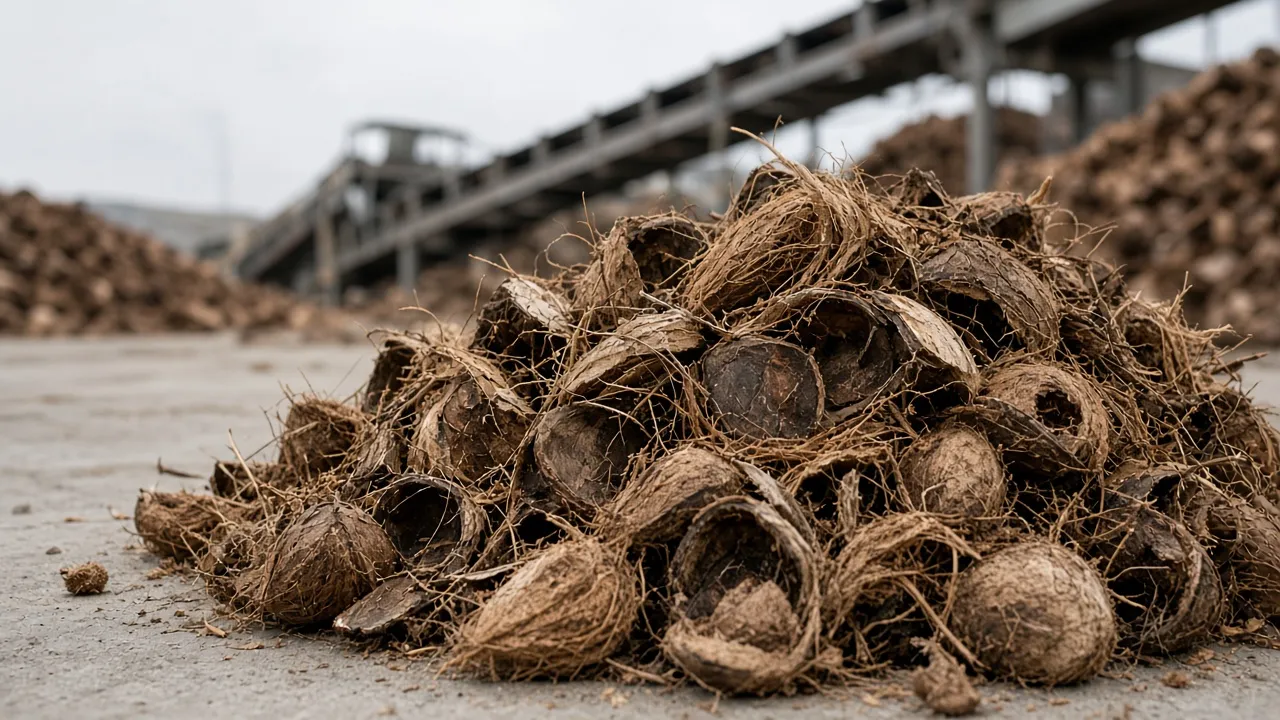
Much of each coconut is fibrous husk and hard shell, carbon-rich material usually treated as waste.
Left to rot or burned in the open, that carbon returns to the air quickly. Used as fuel, it produces renewable energy first.
Heated with little oxygen, residue becomes biochar, a highly stable form of carbon.
Biochar in soil can store carbon for very long periods and may improve water retention.
Palms keep growing and absorbing CO₂, all year round in the tropics.
Carbon-neutral biomass energy releases carbon that plants recently absorbed.
Carbon-negative goes further, durably storing part of that carbon, for example as biochar, so more is removed than released.
Educational summary. Actual sequestration depends on process, feedstock and verified measurement.
We work with energy producers, agricultural processors, landowners, technology providers, compute customers and long-term investors.